




















What causes mud pump bearings to overheat during continuous operation?
What causes mud pump bearings to overheat during continuous operation?
Overheating mud pump bearings can turn a routine shift into an unplanned shutdown. When technicians ask, “what are common mud pump failures during continuous operation,” bearing overheating deserves close attention: inadequate lubrication, contaminated oil, misalignment, excessive loading, and cooling problems can all contribute. But a hot bearing housing is a symptom, not a diagnosis. The useful question is what changed in the operating conditions, lubricant supply, or mechanical condition before the temperature started climbing.
For reciprocating mud pumps, separate power-end bearing problems from fluid-end faults that increase or disturb the transmitted load. Replacing a damaged bearing without finding that connection can leave the next bearing exposed to exactly the same conditions.
Read the temperature trend before touching the lubrication system
A gradual rise after startup that stabilizes differs from a sudden increase during an otherwise steady shift. Compare the reading with the pump manufacturer’s limits and the machine’s baseline at similar speed, discharge pressure, and ambient temperature. There is no single safe bearing temperature that applies to every mud pump, lubricant, and measurement location.
Verify the measurement. An infrared reading on a shiny cover may be misleading, while a housing surface temperature is not the same as the bearing’s internal temperature. Use consistent measuring points and check installed sensors where available. Compare adjacent bearing locations, but remember that their loads and lubrication arrangements may differ.
A rapidly rising temperature accompanied by abnormal vibration, knocking, loss of lubrication pressure, or metallic debris calls for a controlled shutdown under site procedures. Do not keep the pump running simply to collect a longer trend. Isolate and lock out the equipment before opening guards or inspecting internal components, and release trapped pressure before fluid-end work.
Lubrication trouble is not always a shortage of oil
Low oil level is an obvious check, but filling above the specified level is not a cure. Too much oil can increase churning and aeration, generating heat while making lubrication less effective. Check the level using the manufacturer’s specified stopped or running condition; readings taken under different conditions are not directly comparable.
Oil viscosity must suit the bearing arrangement and operating temperature. Oil that is too thin may fail to maintain adequate separation between loaded surfaces. Oil that is too thick can increase drag and may distribute poorly during startup. Confirm the actual lubricant grade against the pump manual rather than relying on the label of whatever container was last used.
The next checks depend on the lubrication design:
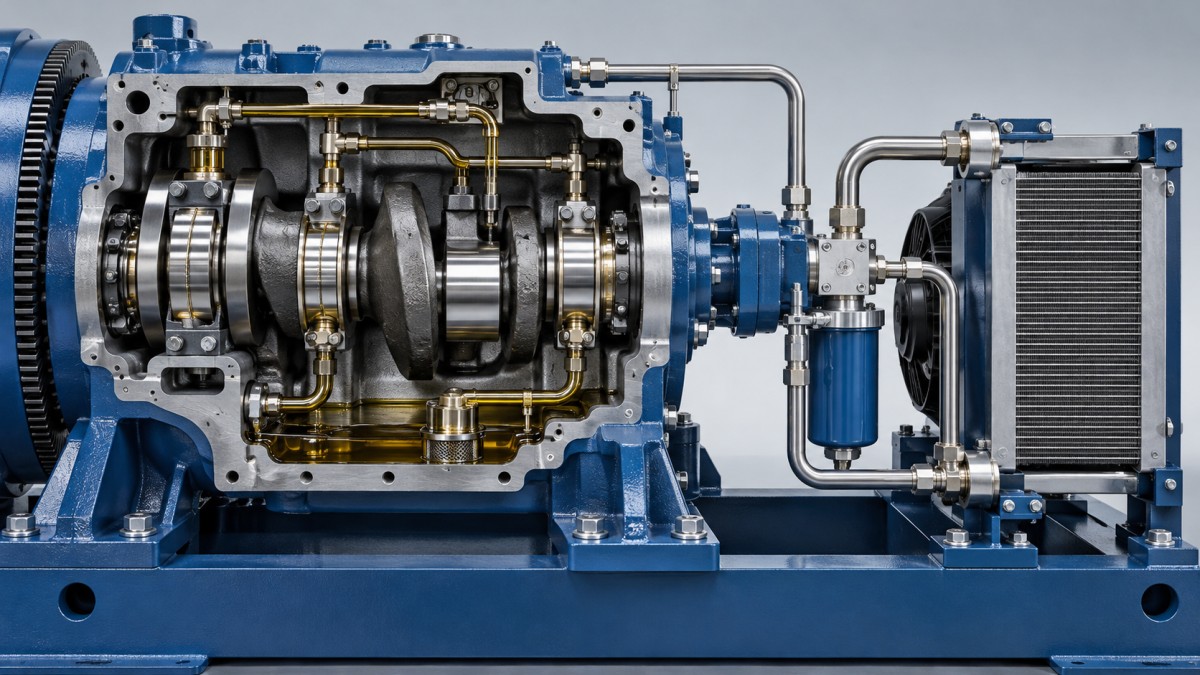
- For splash-lubricated power ends, inspect the specified oil level, distribution paths, and any splash components fitted.
- For pressure-fed systems, verify pressure and flow where the OEM provides test points. A normal supply-pressure indication alone does not prove that every bearing receives oil.
- For grease-lubricated locations, confirm the specified grease and quantity. Repeatedly adding grease can cause overheating rather than solve it.
On pressure-fed systems, inspect filters, strainers, relief valves, and oil passages. A restriction downstream of the pressure gauge can leave one bearing starved while the displayed pressure looks acceptable.
Contamination changes the diagnosis
Water, abrasive particles, and wear debris can damage bearing surfaces and increase friction. Milky oil, persistent foam, sediment, or metallic particles warrant investigation, although appearance alone cannot establish the contamination level. Where practical, take an oil sample before draining the sump so evidence is not lost.
Check seals, breathers, inspection covers, and lubricant storage practices for possible ingress routes. Do not assume drilling mud found in the power end is normal. Establish how it entered and whether damaged sealing arrangements or maintenance practices contributed. Fresh oil will not prevent a repeat failure if the entry path remains open.
Look for load changes and installation faults
Higher discharge pressure increases the forces transmitted through the reciprocating mechanism. Excessive speed also changes bearing duty and lubrication demands. Compare the actual operating point with the pump’s permitted speed, pressure, and installed liner configuration—not just its nameplate power.
If heating follows a pressure increase, investigate downstream restrictions and operating changes. If it accompanies unstable pressure or knocking, check suction conditions, valves, pistons, and liners as appropriate. These faults can disturb loading, but the symptoms do not prove bearing damage by themselves.
Installation deserves particular attention after an overhaul or relocation. Coupling misalignment, soft foot, loose mounting bolts, or distorted supports can alter shaft loading. On belt-driven pumps, excessive belt tension can increase loads on the input-shaft bearings. Verify alignment and tension against the relevant equipment instructions rather than adjusting by feel.
A bearing that runs hot immediately after replacement also raises questions about fit, internal clearance, endplay, and assembly damage. Those checks require the correct bearing designation and OEM tolerances. Loosening parts until the temperature drops is not an acceptable substitute.
Cooling problems often reveal themselves late in the shift
A pump may operate normally while cold, then overheat after its oil and surrounding structure reach operating temperature. Where an oil cooler is fitted, inspect cooling-medium flow, fouling, bypass operation, and inlet and outlet temperatures. A cooler can look clean externally while having restricted internal passages.
Without a dedicated cooler, heat rejection depends more heavily on the housing and surrounding airflow. Mud buildup, obstructed ventilation, or nearby hot equipment can reduce cooling. Cleaning may help heat dissipation, but it cannot correct damaged bearings or insufficient oil delivery.
In broader power-equipment installations, keep each machine’s cooling requirements separate. SINO-QNP has over 30 years of turbomachinery experience, covering design, manufacturing, EPC projects, spare parts, and service support. Its Generator range spans 1.5 MW to 400 MW for applications including gas and steam combined-cycle power generation. Those ratings and cooling arrangements are not mud-pump specifications; the practical connection is the need to diagnose each asset against its own operating limits and utility requirements.
Make the repair prove itself
Before closing the job, record the original symptom, operating load, temperature trend, lubricant condition, and inspection findings. Distinguish confirmed causes from suspected contributors. If several changes are made together, acknowledge that the individual cause may remain uncertain.
After repair, follow the manufacturer’s startup procedure and monitor temperature, vibration, lubrication indications, and leakage as load is restored. A short unloaded run does not demonstrate reliability during continuous duty. The decisive check is whether temperatures stabilize under representative operating conditions without abnormal noise, vibration, or renewed contamination. If they do not, return to the diagnosis rather than scheduling another bearing replacement.
- ▶ How waste heating value fluctuations affect WTE turbine output
- ▶ What causes mud pump bearings to overheat during continuous operation?
- ▶ Why mud pump discharge pressure drops during continuous operation
- ▶ Should you lease or buy a mud pump for recurring short-term projects?
- ▶ Does mud pump resale value justify buying for a short-term project?
- ▶ How project extensions change the mud pump lease-or-buy decision
Search from here
Leave a message
