




















How project extensions change the mud pump lease-or-buy decision
How project extensions change the mud pump lease-or-buy decision
A pump lease may look economical for a short project—until schedule extensions turn temporary rental costs into a growing budget commitment. For project managers asking, “is it better to lease or buy a mud pump for short-term projects,” the answer depends on more than the original completion date. Extension fees, equipment availability, maintenance responsibilities, and future utilization can shift the balance. The useful question is not whether renting was right at mobilization. It is whether continuing to rent remains the right decision today.
An extension does not automatically justify ownership. A delayed project can create more billable rental time without creating more productive operating hours. That distinction matters when comparing cash commitments, equipment wear, and the possibility of redeployment.
Separate additional work from additional waiting
Before reopening the procurement decision, establish what the revised schedule actually requires. Extra drilling or circulation work increases operating hours and consumable demand. Waiting for access, approvals, or another contractor may simply leave equipment standing on site. Both extend the calendar, but they produce different cost profiles.
Ask the site team to distinguish active pumping days, standby periods, and uncertain release dates. Then check whether the rental agreement bills by calendar period, operating hours, or a combination. Do not assume that an idle machine qualifies for a reduced rate.
For intermittent demand, returning the unit between work phases may be sensible—but only after accounting for collection, remobilization, recommissioning, and availability. A lower rental bill is not a saving if replacement equipment arrives after the next work window opens.
Recalculate from the decision date, not the original start date
Rental payments already made are normally sunk costs. They help explain the budget variance, but they should not be added to the future cost of continuing the lease when comparing it with buying now. The exception is any contractual rental credit that genuinely reduces a purchase price.
Build the comparison around the remaining requirement:
- Continue leasing: remaining rental charges, extension fees, transport, insurance, chargeable maintenance, and expected return-condition costs.
- Buy now: purchase price, delivery and commissioning, financing or capital cost, maintenance, storage, and eventual disposal costs, less a defensible residual value.
- Switching exposure: temporary rental during delivery, installation changes, testing, and any overlap needed to maintain pumping capacity.
Include fuel or electricity in both options where relevant. These costs may broadly cancel when the packages are equivalent, but not when their drivers, efficiency, or operating points differ. Likewise, maintenance included in a rental rate should not be counted again as a separate expense.
A useful break-even test is whether avoided future rental expense exceeds the net cost of ownership and switching. Use comparable scopes and the same time horizon. For longer commitments, finance should also consider payment timing rather than relying solely on undiscounted totals.
Run this calculation against three schedules: the current forecast, a credible further extension, and an early finish. If buying only looks attractive under the longest scenario, the decision depends heavily on schedule confidence—not just equipment price.
The extension clause can matter more than the headline rate
An extension may preserve the original rate, trigger a different billing period, or require a new agreement. The actual contract controls. A discounted initial hire period tells you little about the next period unless the terms are explicit.
Check notice deadlines, minimum extension periods, partial-period billing, and whether the supplier can require return because the unit is committed elsewhere. Also establish whether rental charges pause during breakdowns and who pays for transport or replacement equipment. “Maintenance included” is too broad to resolve those questions.
Wear components deserve particular attention. Responsibility for liners, pistons, valves, and damage associated with operating conditions should be clear. An extended assignment may increase replacement frequency even when the base rental rate stays unchanged.
A negotiated longer-term rental rate or a documented purchase option can be a practical middle ground. Confirm whether any rental credit applies, which equipment it covers, and how condition affects the final price. Do not build a business case around an informal promise.
Compare complete pumping packages, not model labels
A cheaper purchase is not an equivalent alternative unless it meets the duty. Confirm required flow at working pressure, fluid properties, solids characteristics, anticipated operating hours, and site power constraints. Maximum flow and maximum pressure figures should not be assumed to be simultaneously achievable.
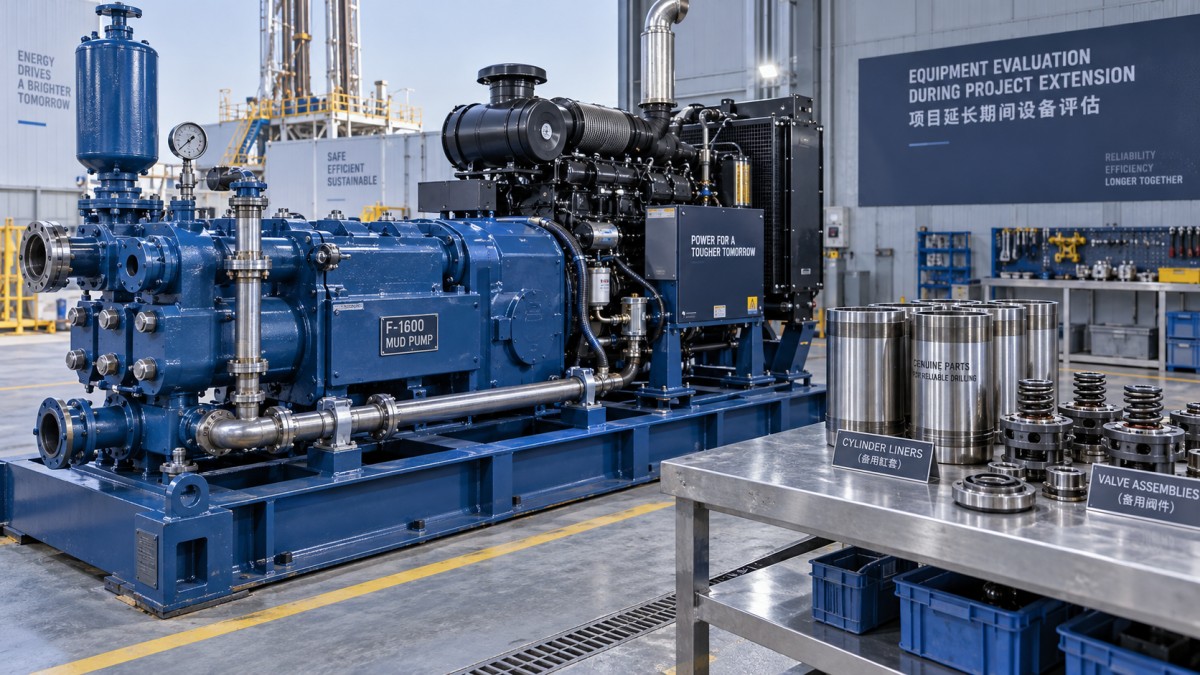
The Mud pump product range includes NF and PZ models, with diesel-engine and motor-driven configurations, and is described as designed and manufactured according to API standards. Those details provide a starting point for evaluation, not proof of suitability for a particular duty. Request the performance data, exact applicable API standard and edition, package scope, and supporting documentation.
Driver selection affects the ownership case. An electric configuration requires suitable power capacity and starting arrangements; a diesel configuration adds fuel logistics and engine servicing. Check whether quotations include the driver, controls, base, connections, and required accessories. Package omissions can erase an apparent purchase-price advantage.
SINO-QNP’s stated capabilities span turbomachinery—including gas turbines, steam turbines, compressors, and generators—with more than 30 years of industry experience. Its R&D, manufacturing, EPC, spare-parts, and global service capabilities are relevant when assessing package integration. For this decision, however, obtain specific commitments on delivery, commissioning support, and spare-parts availability rather than treating general capability as a guaranteed project response.
Future utilization must be credible—and ownership must be manageable
Ownership becomes more compelling when an extended project is followed by confirmed work requiring a compatible duty. A possible future assignment is weaker evidence. Different pressure requirements, transport constraints, or power arrangements may prevent reuse even when the equipment is nominally available.
Name the likely next project, expected mobilization date, and responsible budget owner. Include the idle interval between assignments, preservation requirements, and transport costs. Keep resale assumptions conservative unless supported by current market evidence and realistic condition expectations.
Also ask who will maintain the asset. Buying transfers responsibility for service planning, spare inventory, inspections, and repair coordination. A project team without workshop capacity may still choose ownership, but it needs a priced support arrangement—not an assumption that maintenance will be absorbed by existing staff.
Set a decision deadline before the next commitment
Reassess before the next extension notice deadline. Compare a written continuation quote with a technically matched purchase offer and a confirmed delivery schedule. If replacement cannot arrive before the rental period ends, include the bridge rental and transition plan.
Continue leasing when remaining demand is uncertain, near-term availability is critical, or ownership support is unresolved. Buying deserves closer consideration when remaining operating demand is substantial, follow-on utilization is documented, and delivery can be managed without interrupting work. The deciding factor is the cost and risk of the next commitment—not how much has already been spent.
- ▶ How waste heating value fluctuations affect WTE turbine output
- ▶ What causes mud pump bearings to overheat during continuous operation?
- ▶ Why mud pump discharge pressure drops during continuous operation
- ▶ Should you lease or buy a mud pump for recurring short-term projects?
- ▶ Does mud pump resale value justify buying for a short-term project?
- ▶ How project extensions change the mud pump lease-or-buy decision
Search from here
Leave a message
