




















Back Pressure vs Condensing Steam Turbine: Which One Fits Your Process?
Back Pressure vs Condensing Steam Turbine: Which One Fits Your Process?
The real difference is not whether one steam turbine is more advanced than the other. It is whether your plant is built around useful steam, useful power, or a changing balance of both. Many selection mistakes happen because teams compare turbine types as standalone equipment, when the better question is how the turbine will behave inside the whole thermal system.
A back pressure turbine exhausts steam at a pressure that can still be used in the process, for heating, drying, district heat, or other thermal duties. A condensing turbine keeps expanding steam down to very low exhaust pressure, typically to maximize power output, and then sends that exhaust to a condenser. On paper, that sounds straightforward. In projects, the implications are much bigger: steam balance, utility costs, cooling infrastructure, operating flexibility, and even outage consequences can all shift depending on this choice.
That is why project managers should treat this as a system decision, not just a machine purchase.
What Back Pressure Really Means in Plant Economics
Back pressure turbines are usually a strong fit when the process already needs medium- or low-pressure steam continuously. Instead of reducing steam pressure through a valve and wasting the pressure drop, the turbine converts part of that energy into shaft power or electricity before the steam enters the process header. In other words, power is generated as a by-product of steam use.
This is why they are common in heat supply systems, biomass power generation, waste heat utilization, and industrial drive applications where thermal demand is stable. If your plant economics are dominated by process steam consumption, a back pressure configuration can be very efficient at the site level because it aligns with what the plant already needs to consume.
The tradeoff is just as important: power output is tied to downstream steam demand. If the process does not need the steam, the turbine cannot freely keep generating at the same level. That limits independence. For plants with highly variable thermal load, this can become a planning issue rather than a technical defect.
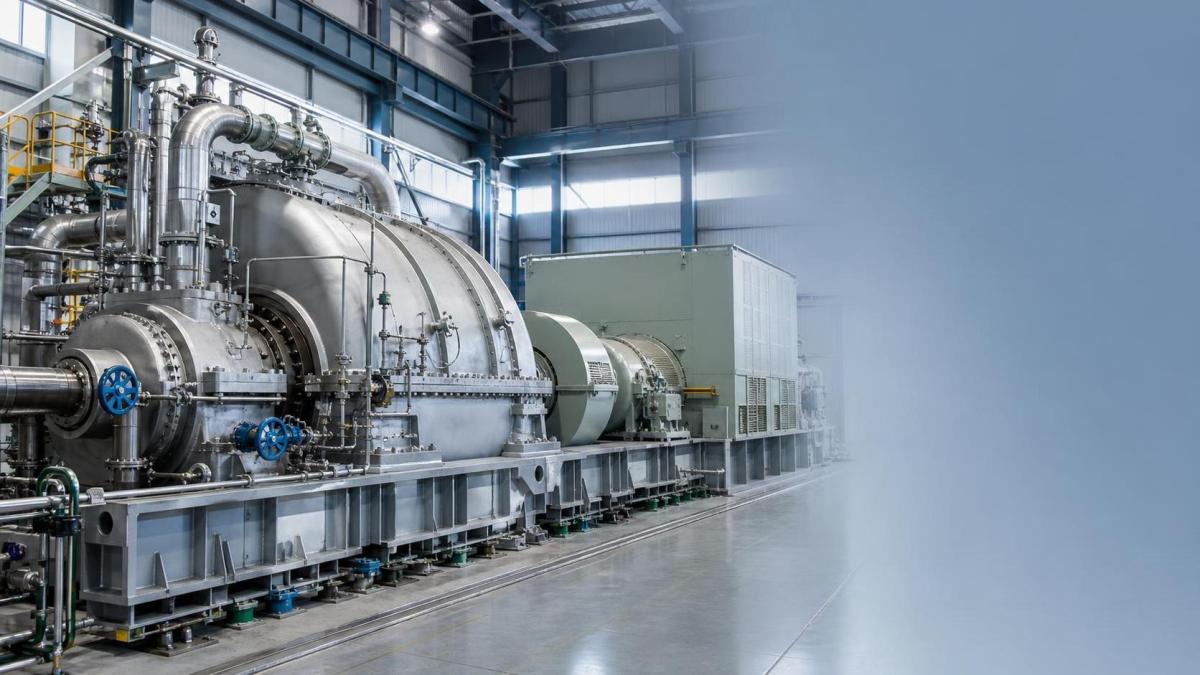
Why Condensing Turbines Appeal to Power-Focused Projects
A condensing steam turbine is usually selected when the primary target is electrical generation. Because steam expands further before exhaust, more enthalpy drop is converted into mechanical work. That generally means higher power output from the same inlet steam conditions than a back pressure unit can deliver.
This makes condensing machines attractive for thermal power generation, some combined cycle arrangements, and projects where exported electricity carries more value than residual process steam. They also offer more decoupling between steam production and thermal consumption. If the plant strategy depends on maximizing kilowatt output rather than matching a fixed heat load, condensing is often the cleaner choice.
But this comes with infrastructure and operating requirements. A condenser, cooling system, vacuum performance, water availability, and auxiliary power consumption all matter. In water-constrained locations or sites with stricter balance-of-plant limits, those supporting systems can influence project viability as much as turbine efficiency does.
A Comparison That Matters More Than Nameplate Preference
This comparison is still incomplete unless you check the steam profile over time. A plant with a steady annual steam requirement may still have large hourly swings. That can change the preferred configuration, especially if the project is expected to follow seasonal heat demand or varying industrial output.
Common Misunderstandings During Selection
One common mistake is to assume condensing turbines are always the more efficient option. They are more effective at extracting power, but plant-level efficiency depends on what happens to the exhaust energy. If the site needs low-pressure steam anyway, exhausting to a condenser may recover more electricity while losing heat that the process could have used directly.
Another mistake is to treat back pressure units as suitable only for small cogeneration schemes. In practice, application scope is much wider. Depending on process conditions and project design, industrial steam turbine solutions can cover broad output ranges and multiple duty profiles. Manufacturers such as SINO-QNP work across turbomachinery applications including thermal power generation, waste heat utilization, heat supply, and combined-cycle related projects, which is why turbine selection often needs to be discussed together with the rest of the energy island rather than in isolation.
A third issue is overlooking extraction arrangements. The market is not limited to a binary choice. In many plants, extraction-condensing or extraction-back-pressure layouts provide a more practical compromise. The right answer may not be one pure type, especially when future process expansion is likely.
What Project Managers Should Check Before Committing
Before selecting a turbine, it helps to pressure-test a few operating assumptions:
- Is process steam demand continuous, seasonal, or batch-driven?
- Does the project earn more from power export, internal power offset, or thermal utilization?
- What are the real limits on cooling water, air-cooling footprint, and auxiliary systems?
- How much operating flexibility is required during partial load or process upset conditions?
- Will future expansion require additional extraction points or changes in steam header pressure?
These questions usually do more to narrow the choice than generic efficiency claims. They also help when comparing equipment beyond the turbine body itself, including control philosophy, condenser interface, and steam balance integration.
For example, an industrial Steam Turbine portfolio may include impulse type and reaction type designs, as well as condensing, extraction condensing, back pressure, and extraction back pressure configurations. Output ranges can vary widely, so nameplate capacity alone tells you very little unless it is tied to inlet conditions, exhaust requirements, and the plant’s intended duty.
A Practical Way to Decide
If your process must consume steam and that steam demand is stable enough to anchor the thermal cycle, back pressure is often the more rational solution. If your business case is driven by electricity and the site can support the condenser and cooling system, condensing is usually easier to justify. Where both objectives matter and operating conditions move around, an extraction-based arrangement often deserves early evaluation instead of being treated as a late-stage upgrade idea.
The strongest projects are the ones where the turbine type follows the process logic. That sounds obvious, but it is still where many decisions drift off course. Start with the steam balance, test it against operating scenarios, then choose the steam turbine that fits the plant you will actually run, not the one that looks best in a simplified efficiency comparison.
- ▶ When an extraction steam turbine improves combined heat and power output
- ▶ What happens when process steam demand changes on an extraction steam turbine
- ▶ How to match extraction steam turbine pressure to process demand
- ▶ When local service coverage matters for a gas turbine generator manufacturer
- ▶ How manufacturer lead times can alter a gas turbine generator project
- ▶ Which certifications matter when choosing a gas turbine generator manufacturer
Search from here
Leave a message
