




















What maintenance costs should be budgeted for a small gas turbine generator
A realistic maintenance budget for a Small Gas Turbine Generator should cover routine service, condition monitoring, planned replacement of life-limited parts, labour, outage preparation, and a reserve for findings discovered during inspections. The purchase price does not show the cost of keeping the unit available over its operating life. A low annual service allowance can appear attractive until a short-notice shutdown requires expedited parts, specialist labour, lifting equipment, and lost generation.
Maintenance spending is best planned around operating hours, starts, fuel quality, ambient conditions, and load profile rather than by calendar year alone. A unit operating steadily near its intended load accumulates wear differently from one used for frequent peak support, emergency standby, or repeated start-stop cycles. Starts and rapid load changes impose thermal stress on hot-section components, while dusty air, salt exposure, poor inlet filtration, and fuel contamination can accelerate fouling and corrosion.
Recurring costs that belong in the operating budget
Routine inspections form the base of the maintenance plan. These include visual checks for leaks, abnormal vibration, loose connections, damaged insulation, and deterioration in the inlet and exhaust system. They also include trend review of exhaust temperature spread, vibration readings, lube-oil pressure, fuel pressure, generator electrical values, and startup behaviour. The cost is not limited to the inspection visit; it includes access, shutdown coordination, reporting, and corrective work identified during the visit.
Lubricants, filters, seals, cleaning materials, and small consumables are individually modest but predictable expenses. Lubricating oil requires scheduled sampling as well as replacement. A laboratory result that shows water, fuel dilution, excessive particles, or abnormal metal content should trigger investigation before an oil change simply resets the symptom. Oil filters, breather elements, fuel filters, inlet filter cartridges, gaskets, O-rings, and igniter-related consumables should be budgeted as separate line items because their replacement interval may differ.
Air inlet maintenance deserves particular attention. Restriction across filters raises inlet pressure loss and can reduce output while increasing fuel consumption for a given electrical demand. Replacing filters too early wastes materials; leaving them in service beyond their pressure-drop limit increases performance loss and the risk of ingested contaminants. The right budget basis combines site dust loading, differential-pressure history, weather exposure, and the quality of the filter housing seals.
Fuel-system costs vary with the fuel source and its treatment requirements. Gas quality, liquid fuel cleanliness where applicable, water carryover, and fuel pressure stability affect valves, nozzles, filters, and combustion performance. A budget should include periodic functional testing and cleaning where the service documentation calls for it, rather than treating fuel-system work as an unexpected repair category.
Planned outages and major service events
Small gas turbine maintenance is often organized into inspection intervals, hot-section work, and more extensive overhaul events. Exact intervals must come from the applicable equipment documentation and operating record. A budget should not assume that all units of similar output require the same scope. Two machines with comparable hours can have materially different maintenance needs if one has accumulated many starts, operated in high ambient temperatures, or experienced inlet contamination.
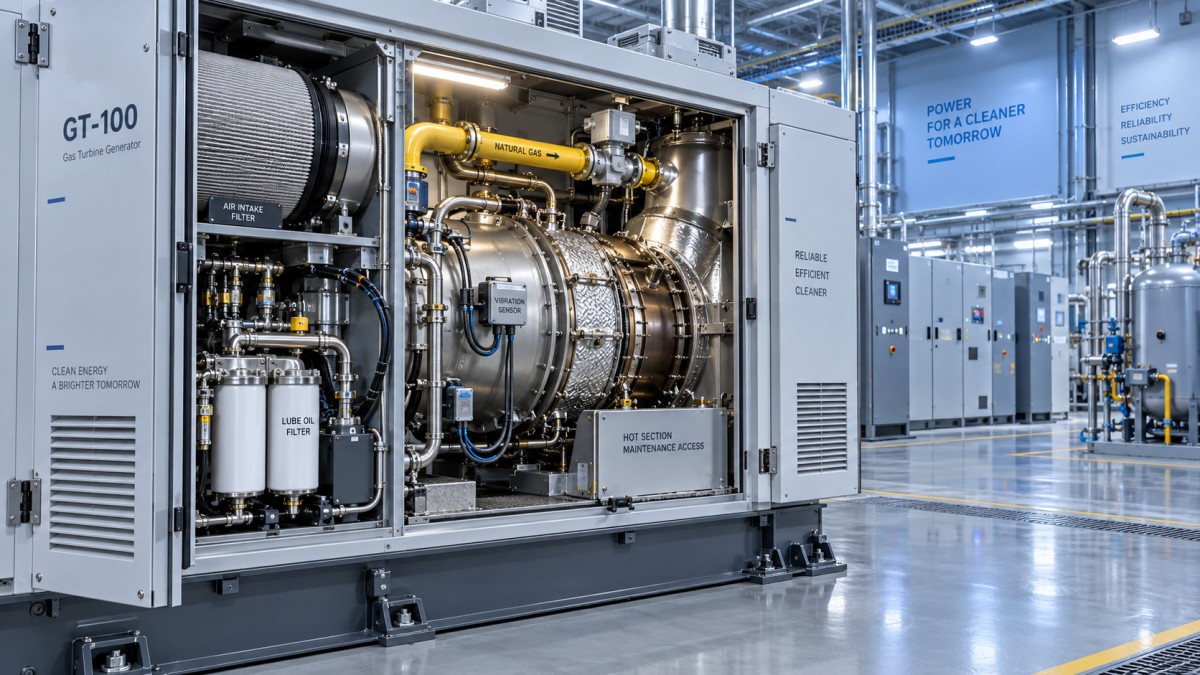
The hot section is a major source of lifecycle cost because combustion liners, transition pieces, nozzles, blades, and related hardware experience high temperature, oxidation, thermal cycling, and vibration. Repairability depends on component condition, material condition, coating integrity, cooling-hole condition, and the repair process approved for that component. Budgeting only for a nominal exchange kit can be misleading when inspection reveals parts outside repair limits.
Major overhaul allowances should include the work surrounding the turbine itself. Coupling alignment, generator inspection, electrical connection checks, enclosure repairs, ventilation-system service, and recommissioning all require time and materials. If the package must be removed from a constrained plant room, lifting studies, temporary access, transport protection, and installation support can be as important to outage cost as the internal engine work.
Labour, access, and outage exposure
Service labour should be separated into planned labour and responsive labour. Planned work can be scheduled around production windows, with parts staged before shutdown. Responsive work often carries higher travel, mobilization, and delivery costs, especially when troubleshooting requires specialist instrumentation or a replacement module is needed quickly.
Access conditions can change the economics of the same repair. An outdoor package with clear lifting access is different from an indoor installation with restricted doors, elevated exhaust ducting, or shared plant access. Scaffolding, crane hire, forklift availability, electrical isolation, gas isolation, and post-maintenance performance checks should be evaluated before approving an annual maintenance figure. These items are sometimes carried under site operations rather than the generator budget, but they still affect the total cost of ownership.
Downtime has two cost dimensions. The direct maintenance invoice is visible; the cost of unavailable power is less visible but can be greater. Where the generator supports a critical process, the budget should identify whether temporary generation, load reduction, grid supply, or a standby unit is available during planned outages. This is not a reason to defer maintenance. Deferred inspections tend to convert manageable wear into an urgent outage with less control over labour and parts.
Spare-parts strategy changes the cash profile
A practical spare-parts budget distinguishes between consumables, insurance spares, and overhaul materials. Consumables are purchased regularly. Insurance spares are held because a failed item would create a long outage, even though the item may not be used in a given year. Overhaul materials are acquired ahead of a planned event after the expected scope is known. Combining all three categories into one annual parts figure obscures both inventory value and outage risk.
Long-lead components deserve early review. Bearings, fuel-control items, sensors, ignition equipment, actuators, specialized seals, and hot-section hardware may have different supply lead times and storage requirements. Shelf life matters for elastomers, certain chemicals, batteries, and electronic modules. An apparently available spare that has deteriorated in storage or lacks configuration verification can still delay a repair.
For an installation that also includes process air equipment, the maintenance plan should account for operating interactions between the generator and the connected Compressor. A change in process demand can alter generator loading, start frequency, and operating hours. Shared intake areas, ventilation paths, control signals, or shutdown logic should be reviewed during outage planning so that work on one package does not introduce avoidable commissioning work on the other.
Condition monitoring is a budget item, not an optional extra
Instrumentation maintenance is frequently underfunded because sensors are expected to run indefinitely. Vibration probes, thermocouples, pressure transmitters, speed pickups, fire and gas detection devices, battery-backed controls, and protective relays require functional checks, calibration where applicable, and replacement when their condition becomes unreliable. A failed sensor can create nuisance trips, conceal deterioration, or force conservative operation.
Trend data is useful only when operating conditions are recorded alongside it. A rise in exhaust temperature does not automatically indicate turbine damage; it may reflect ambient temperature, inlet restriction, fuel changes, sensor drift, or load variation. Likewise, elevated vibration may come from a rotating component, a coupling alignment issue, loose mounting hardware, or a change in the driven generator. The budget should include diagnostic time to distinguish the cause before replacing expensive parts.
Remote monitoring and data collection may reduce the need for unnecessary site visits, but they also create ongoing costs for communications hardware, software support, cybersecurity controls, data review, and replacement of obsolete devices. These costs are justified by the maintenance process they support, not by the presence of a dashboard alone.
Build the budget from operating assumptions
A useful approval model separates fixed annual costs from usage-driven costs. Fixed costs include periodic inspection, monitoring-system upkeep, battery replacement planning, service agreement administration where used, and a baseline inventory of consumables. Usage-driven costs include service labour tied to hours or starts, filter replacement linked to inlet condition, hot-section reserves, overhaul reserves, and fuel-system work influenced by fuel quality.
Each assumption should be traceable: expected annual operating hours, expected starts, normal load range, ambient conditions, inlet filtration arrangement, fuel specification, required availability, and access limitations. This makes later variance understandable. When maintenance expense rises, the record can show whether the cause was higher utilization, a harsher environment, changed operating practice, or an inspection finding rather than an unexplained cost overrun.
Set aside a controlled contingency for inspection findings, but do not use contingency to replace planned overhaul funding. Planned lifecycle work is foreseeable from the maintenance schedule and should be accrued accordingly. Contingency is for scope changes such as unexpected erosion, corrosion, damaged wiring, degraded insulation, or ancillary equipment faults discovered after shutdown.
The strongest maintenance budget is therefore a living schedule tied to actual operating history. It funds routine work without neglecting major events, identifies the logistical cost around outages, and preserves enough flexibility to correct verified conditions before they become forced failures.
- ▶ When an extraction steam turbine improves combined heat and power output
- ▶ What happens when process steam demand changes on an extraction steam turbine
- ▶ How to match extraction steam turbine pressure to process demand
- ▶ When local service coverage matters for a gas turbine generator manufacturer
- ▶ How manufacturer lead times can alter a gas turbine generator project
- ▶ Which certifications matter when choosing a gas turbine generator manufacturer
Search from here
Leave a message
