




















How boiler steam conditions determine the right WTE turbine size
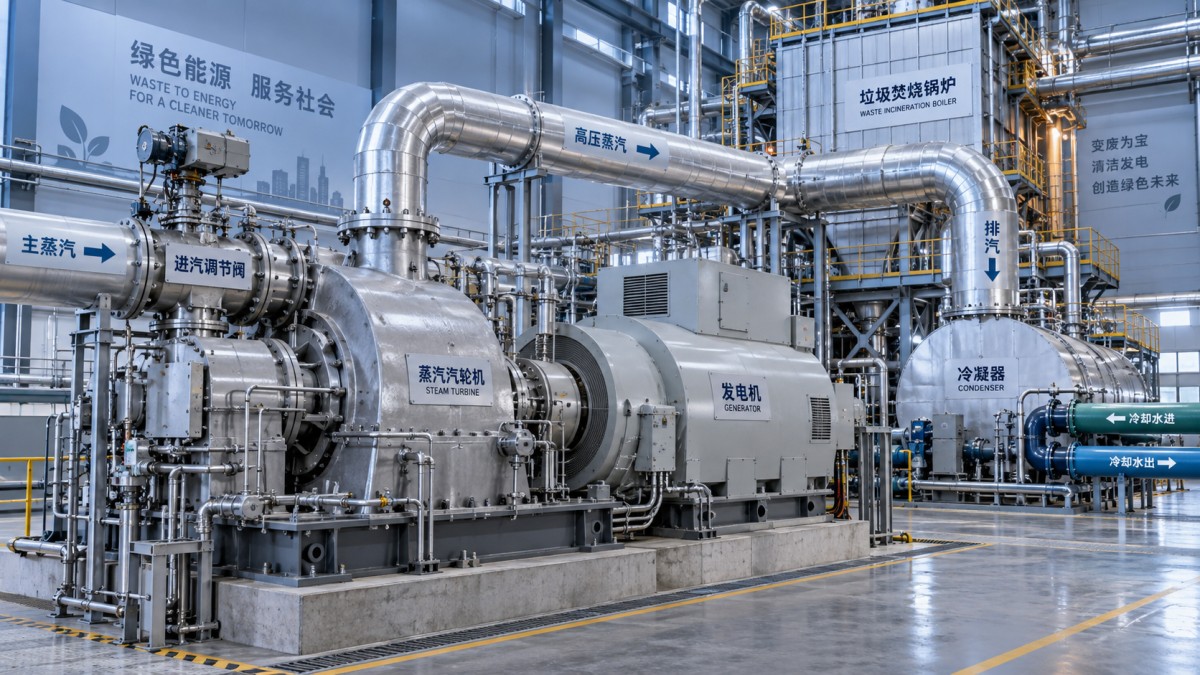
The right WTE turbine size is determined by the steam the boiler can reliably deliver at the turbine inlet, together with the required exhaust conditions—not by a target electrical rating alone. Steam mass flow establishes throughput, while inlet pressure, temperature, and exhaust pressure determine the energy available for conversion. Selection must cover normal operation, sustained maximum flow, and the low-load conditions the plant will actually encounter.
A proposal based only on the boiler’s nominal steam production can look satisfactory at the design point yet perform poorly when waste heating value changes, steam is diverted to plant services, or condenser pressure rises. The practical starting point is a verified steam balance and operating envelope. These establish turbine flow capacity, configuration, achievable output, and the conditions under which performance guarantees should apply.
Establish the steam conditions at the turbine boundary
Boiler outlet data and turbine inlet data are not interchangeable. Pressure losses through piping, valves, and strainers reduce admission pressure. Heat losses and attemperation affect temperature, while deaerator supply, sootblowing, process users, and other steam consumers reduce the flow available for power generation.
Use measurements or design calculations at a clearly defined turbine inlet boundary. For an operating plant, synchronized records are more useful than separate maximum values: the highest flow, pressure, and temperature may not occur together. For a new plant, request internally consistent boiler operating cases rather than a single nominal specification.
Translate boiler steam into a defensible power rating
For a simple turbine without extraction, a first-pass estimate is:
Gross electrical power ≈ steam mass flow × isentropic enthalpy drop × turbine isentropic efficiency × mechanical efficiency × generator efficiency.
With mass flow in kg/s and enthalpy drop in kJ/kg, the result is in kW. Determine the isentropic exhaust enthalpy from steam properties using inlet entropy and exhaust pressure. This estimate supports proposal screening; it does not replace a supplier’s stage calculation or guaranteed performance map.
Higher inlet temperature generally increases the energy available for expansion and can improve exhaust steam quality. Pressure changes affect both the thermodynamic expansion and inlet steam density, so their effect cannot be assessed independently of temperature, flow, and exhaust conditions. Two turbines receiving the same mass flow can therefore produce different outputs and require different admission geometries.
For extraction or multiple-admission arrangements, use a section-by-section heat balance. Steam removed at an extraction point no longer passes through downstream stages. Also distinguish generator-terminal output from net plant export: pumps, fans, cooling equipment, and other auxiliaries consume electricity. A gross rating should not be compared directly with another proposal’s net export figure.
Choose the exhaust arrangement before fixing the size
The boiler alone cannot establish the correct electrical rating. The turbine’s discharge conditions determine how much of the available steam energy can become shaft work.
Condensing operation for electricity generation
A condensing turbine expands steam to a pressure governed by the condenser and cooling system. Lower exhaust pressure generally increases output, but also increases exhaust volumetric flow and may affect moisture conditions. Assess the exhaust annulus, last-stage blades, and condenser as a matched system.
A rating calculated at favorable cooling conditions may overstate output during warmer periods. Request performance at the specified seasonal condenser pressures, including any limits on exhaust flow or operation at low load.
Back-pressure or extraction operation for useful heat
A back-pressure turbine discharges steam at the pressure required by a downstream heat user. Its electrical output is constrained by that pressure and by the user’s ability to accept steam. Selecting a larger generator does not create additional expansion energy or solve a shortage of heat demand.
Where heat demand varies independently of boiler production, an extraction-condensing arrangement may offer operating flexibility. Evaluation must include heat-led and power-led cases, extraction control behavior, and minimum flow through the low-pressure section. Maximum extraction flow and maximum electrical output should not be assumed available simultaneously.
Size for the operating envelope, not every isolated maximum
Waste-to-energy boiler output varies with fuel properties, combustion control, fouling, and operating restrictions. Turbine sizing should distinguish conditions that occur regularly from short peaks that can be managed elsewhere in the steam system.
- Define the normal case: use the expected continuous steam supply, typical heat demand, and representative cooling conditions.
- Check sustained maximum operation: confirm admission capacity, valve position, generator capability, and exhaust flow using steam conditions that can occur together.
- Evaluate minimum stable operation: examine efficiency, governing stability, extraction pressure control, and manufacturer-defined minimum-flow limits.
- Review credible transients: define the response to boiler fluctuations, load rejection, heat-user interruption, and turbine trips.
An oversized steam path may spend much of its operating life away from its intended flow conditions. A turbine sized too tightly may restrict admission during sustained high production, forcing steam through a bypass or constraining boiler operation. Compare expected annual generation using a load-duration profile, rather than choosing whichever proposal has the largest nameplate rating.
Grid scheduling introduces a separate decision. Where the plant needs to shift electrical delivery between periods, Air Energy Storage uses surplus grid electricity to compress air, captures compression heat in a thermal storage medium such as molten salt, and later heats the released air before expansion to generate power. Such storage addresses electrical timing; it does not increase boiler steam availability or replace correct turbine sizing.
Make each design margin traceable
A blanket capacity allowance can hide several different assumptions. Require suppliers to identify whether each margin covers uncertain boiler flow, future steam production, admission pressure losses, generator capability, or another defined condition. These allowances should not accumulate without a supporting operating case.
- Flow margin: verify usable admission capacity at the pressure and temperature associated with the additional flow.
- Generator margin: assess capability at specified power factor, ambient conditions, and cooling limits—not only turbine shaft power.
- Exhaust capacity: check volumetric flow at the relevant mass flow and condenser pressure.
- Operating limits: obtain allowable inlet ranges, temperature-change limits, moisture criteria, and minimum continuous load.
Steam quality deserves a separate review. Carryover and inadequate water chemistry control can contribute to deposits, erosion, or corrosion; increasing turbine capacity does not address these risks. Confirm the boiler’s steam purity requirements and the turbine supplier’s acceptance limits before treating performance calculations as sufficient evidence of suitability.
Compare proposals on identical operating cases
Issue one common case matrix to all bidders. It should include rated operation, representative part loads, high condenser pressure, and the required extraction combinations. Request guaranteed output, steam consumption or heat rate, operating limits, and the basis of performance corrections for each applicable case.
Resolve boundary differences before comparing figures: inlet measurement location, generator-terminal versus net output, auxiliary consumption, cooling conditions, and steam diversion assumptions can all change the apparent ranking. Require bypass capacity and trip-response arrangements to be assessed alongside turbine sizing, since boiler steam still needs a safe destination when the turbine cannot accept it.
A technically suitable selection should demonstrate capacity at sustained maximum steam supply, acceptable operation across frequent part-load conditions, and compatibility with the plant’s exhaust and heat-delivery requirements. Any unresolved boiler variability should remain an explicit sensitivity in the evaluation—not disappear inside an unexplained turbine size allowance.
- ▶ How boiler steam conditions determine the right WTE turbine size
- ▶ When is an extraction WTE turbine suitable for district heating?
- ▶ How waste heating value fluctuations affect WTE turbine output
- ▶ What causes mud pump bearings to overheat during continuous operation?
- ▶ Why mud pump discharge pressure drops during continuous operation
- ▶ Should you lease or buy a mud pump for recurring short-term projects?
Search from here
Leave a message
