




















Can a steel plant steam turbine use steam from waste heat recovery?
Yes—a steel plant steam turbine can use steam generated by waste heat recovery, provided its pressure, temperature, quality, and flow match the turbine’s operating requirements.
For project managers, the key question is whether recovered heat can generate reliable power as steelmaking conditions fluctuate, without compromising production or existing steam users.
This article examines steam-source compatibility, turbine selection, and integration considerations that influence project feasibility, operating reliability, and the financial returns available from recovered process heat.
Drawing on more than 30 years of turbomachinery experience, SINO-QNP helps project teams evaluate integrated solutions that turn recoverable process heat into useful power.
What makes recovered steam suitable for a turbine?
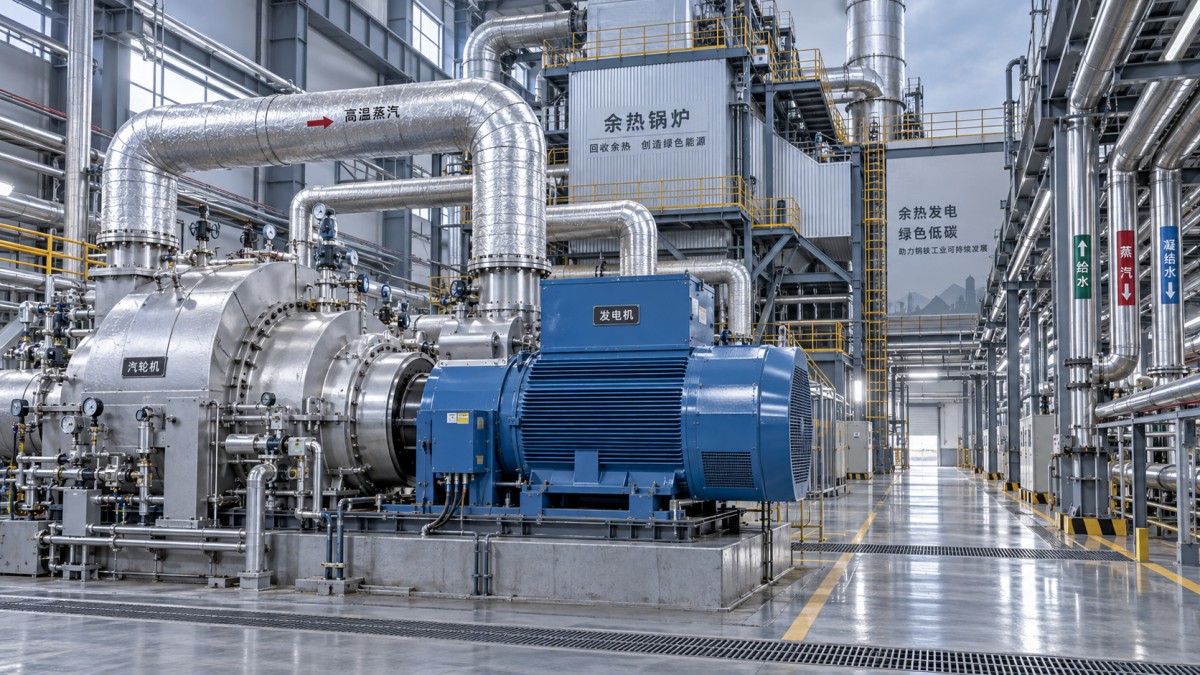
A turbine responds to steam conditions, regardless of whether the heat originated in fuel combustion or steelmaking. Compatibility depends on the conditions reaching its inlet.
Evaluate inlet pressure and temperature together with exhaust pressure. Their relationship determines the available energy drop, achievable output, and whether the proposed turbine arrangement makes sense.
Steam quality includes both moisture condition and chemical purity. Water carryover, dissolved contaminants, and inadequate drainage can cause deposits, erosion, corrosion, or damaging water induction.
There is no universal minimum pressure or temperature for every application. Obtain an operating envelope covering normal conditions, startup, reduced production, and credible process disturbances.
Saturated steam may suit specially designed machines, but a turbine specified for superheated steam cannot automatically accept it. Confirm allowable inlet conditions and exhaust moisture.
The feasibility question therefore becomes measurable: how much acceptable steam reaches the turbine, for how long, and across what range of plant operating conditions?
Which steelmaking heat sources can support power generation?
Potential sources include coke dry quenching, sinter cooling, and selected furnace or converter off-gas streams. Each requires a recovery system suited to its heat characteristics.
Coke dry quenching can offer relatively sustained heat recovery when production remains steady. Actual steam availability still depends on operating schedules, maintenance, and recovery equipment.
Converter off-gas heat is typically more intermittent because steelmaking follows batch cycles. Dust loading, gas composition, and operating practices also affect recovery-system design and availability.
Sinter cooler recovery depends on cooling-air temperature, airflow, and production continuity. Heat quantity alone does not establish whether the resulting steam will support attractive generation.
Where combustible process gas is burned in a boiler, distinguish fuel-based generation from direct waste heat recovery. Their operating dependencies and financial assumptions can differ.
Before selecting equipment, establish existing heat uses and competing steam demand. Diverting recovered energy into electricity may reduce benefits already delivered elsewhere in the plant.
How much dependable power will the project deliver?
Begin with measured operating data covering representative production conditions. Record steam flow, pressure, temperature, batch timing, outages, and the demand from existing steam consumers.
A maximum steam-flow figure is insufficient for sizing a steel plant steam turbine. Compare typical operation, minimum sustained flow, and the duration of peak conditions.
Gross electrical output depends approximately on steam mass flow, usable enthalpy drop, turbine efficiency, and generator efficiency. Detailed predictions require calculations across the expected operating range.
Net output subtracts the electricity consumed by pumps, cooling equipment, fans, and other incremental auxiliaries. Financial models should use net generation at the relevant electrical boundary.
Annual energy depends on how long each operating condition persists. A smaller machine operating efficiently for longer may outperform equipment selected around occasional peak steam flow.
Ask suppliers for output and steam-consumption predictions at several operating points. Include minimum load, typical production, and expected cooling conditions, alongside the nominal design point.
Which turbine configuration matches the plant’s energy needs?
The best configuration depends on what the plant needs after steam expansion. Electricity production and useful steam delivery should be evaluated together wherever both have value.
A condensing arrangement generally extracts more work from a given inlet steam supply, but requires a condenser and suitable cooling, which affect investment and performance.
A back-pressure arrangement can suit plants with continuous downstream steam demand. Its generation potential depends on both recovered steam availability and the receiving process load.
Extraction arrangements offer additional flexibility where several steam demands coexist. Their value should justify the extra controls, equipment, and coordination required during changing production conditions.
SINO-QNP’s Steam Turbine offering includes condensing, extraction-condensing, back-pressure, and extraction back-pressure configurations. Selection should follow verified steam conditions, energy demand, and project constraints.
Can the system handle batch cycles without disrupting steel production?
Waste heat recovery must accommodate the steelmaking process. Define how the turbine system behaves when steam production rises, falls, or stops unexpectedly during normal operations.
Potential measures include coordinated controls, appropriate steam storage, multiple steam sources, and bypass arrangements. Their suitability depends on disturbance duration and the available pressure range.
A steam accumulator may smooth short fluctuations, but its usefulness depends on pressure swing and storage capacity. It cannot compensate indefinitely for a sustained steam shortage.
Provide an engineered destination for steam during turbine trips or unavailable operation. Depending on plant design, this may involve process headers or a suitable bypass condenser.
Agree load-change limits, minimum operating conditions, restart procedures, and protection settings before procurement. These requirements determine whether the installation can follow actual production patterns reliably.
What determines the investment return?
Evaluate the complete installed system: heat recovery equipment, steam piping, water treatment, turbine-generator package, cooling, electrical connection, civil works, controls, and the costs of installation outages.
Annual value includes usable electricity and any useful steam supplied. Deduct operating costs, maintenance, water, incremental auxiliaries, and the value of displaced existing heat uses.
For illustration, an average net output of 5 MW over 6,000 annual operating hours produces 30,000 MWh. These figures are examples, not project performance guarantees.
Multiply that energy by the applicable avoided electricity cost or export revenue. Then account for operating expenses and contractual charges before estimating cash flow and payback.
Test sensitivity to production hours, electricity prices, steam availability, and cooling performance. A project depending on optimistic assumptions across every variable deserves further engineering review.
Confirm how exported electricity is valued and whether connection upgrades are necessary. Self-consumed generation and exported generation may produce substantially different financial results for identical output.
What should project managers request before approving procurement?
Request a documented heat and steam balance covering representative operating cases. It should identify measurements, assumptions, existing steam commitments, and uncertainty in recoverable energy estimates.
Require a coordinated scope defining responsibility for recovery equipment, piping, turbine controls, cooling, water chemistry, and electrical integration. Unclear interfaces often create avoidable commissioning problems.
Set performance guarantees against agreed inlet conditions, exhaust conditions, cooling assumptions, and auxiliary boundaries. State how performance will be measured and corrected during acceptance testing.
Review access for maintenance, spare-parts availability, operator training, and service response. These practical arrangements influence lifecycle availability and the revenue actually achieved after commissioning begins.
SINO-QNP supports projects through design, manufacturing, EPC services, and spare-parts supply. Project teams should establish responsibilities and performance requirements explicitly within the agreed delivery scope.
When is a waste heat turbine project worth pursuing?
A steel plant steam turbine can use recovered steam successfully when compatible inlet conditions, sufficient annual availability, and a suitable exhaust arrangement are established together.
Proceed when measured data supports credible net generation, process continuity is protected, and realistic financial scenarios remain attractive. Resolve uncertain steam availability before final equipment selection.
The next step is a feasibility assessment built around the plant’s operating profile. That provides a defensible basis for turbine sizing, integration planning, and investment approval.
