




















What drives the installed cost of a 100 MW steam turbine?
The installed cost of a 100 MW steam turbine is driven by the complete system required to deliver the agreed electrical output at the site. The turbine quotation covers only part of that investment. Steam conditions, exhaust arrangement, generator specification, cooling facilities, foundations, electrical connections, and commissioning scope determine how much must be added before operation can begin.
A defensible budget starts with a defined project boundary. Installing a turbine-generator beside an existing steam source is a different investment from building a complete generating plant with a boiler, fuel handling, water treatment, and grid connection. A cost-per-kilowatt comparison has little value until those boundaries and the output basis match.
Define what “100 MW” means before comparing prices
The rating must identify whether 100 MW refers to turbine shaft power, gross generator output, or net power exported after auxiliary consumption. Cooling equipment, pumps, and other plant loads reduce exportable power. A proposal guaranteeing gross output cannot be compared directly with one guaranteeing the same numerical value at the grid connection.
The guarantee also needs reference conditions: inlet steam pressure and temperature, available steam flow, exhaust pressure, cooling conditions, and any process steam extraction. For a heat-supply application, maximum electricity production and maximum heat delivery do not necessarily occur together. The relevant comparison is the agreed operating case, including simultaneous electricity and heat requirements.
If a quotation uses favorable cooling conditions while the project requires dependable output during hot weather, the apparent price advantage could disappear through larger cooling equipment or a revised turbine selection. Attach the operating assumptions to the commercial comparison so that an output figure cannot silently change between proposals.
Configuration changes the equipment around the turbine
A condensing arrangement requires a condenser and a means of rejecting heat. That brings cooling equipment, circulating-water or condensate systems, vacuum equipment, piping, and associated civil works into the budget. Where water availability restricts wet cooling, an air-cooled condenser introduces different structural, electrical, land, and ambient-temperature considerations.
A back-pressure arrangement exhausts steam into a process or heating network. It avoids the dedicated condensing system associated with a condensing unit, but its electrical output is tied to the available steam expansion and the receiving network’s pressure and demand. It cannot be priced as an equivalent substitute unless those operating conditions support the required output.
Controlled extraction adds valves, connections, controls, and integration with downstream steam users. The Steam Turbine product category includes condensing, extraction-condensing, back-pressure, and extraction-back-pressure configurations; their installed costs reflect different steam and heat-rejection boundaries.
Higher inlet pressures and temperatures influence material selection, pressure-containing components, valves, and connecting pipework. Their economic value comes from performance within the actual steam cycle. Specifying more demanding conditions without a compatible steam source adds expense without establishing a corresponding operating benefit.
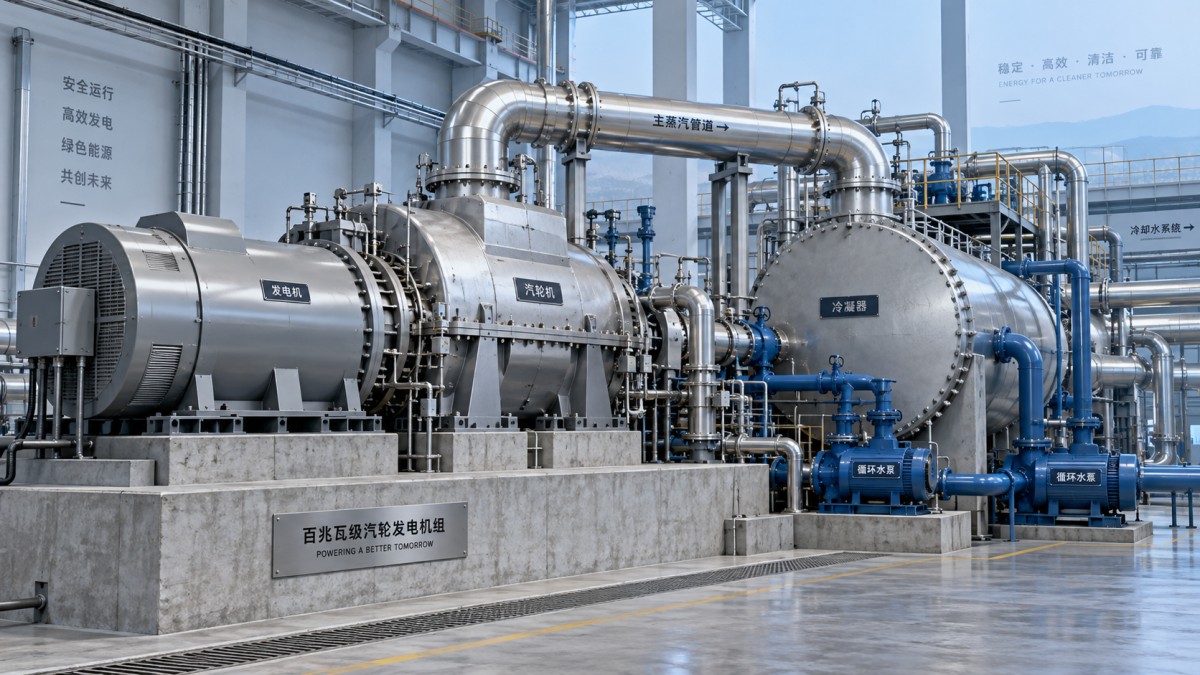
The largest quotation gaps often sit at package boundaries
“Turbine-generator package” and “turnkey installation” need explicit definitions. A supplied component still requires transport, positioning, connection, testing, and acceptance. The following interfaces deserve separate entries in the cost comparison because each can move substantial work between contracts.
An EPC label alone does not resolve these interfaces. The contract needs a scope matrix showing what is included, what is excluded, and where each connection ends. Existing facilities also need evidence of available capacity: a cooling-water connection has limited value if its pumps, piping, or heat-rejection system cannot accommodate the additional load.
Site conditions turn equipment prices into construction budgets
Foundation cost follows equipment loads, dynamic behavior, soil conditions, and the selected arrangement. A preliminary equipment outline does not establish the final foundation price. Ground investigation and sufficiently developed load data reduce the uncertainty before civil work is committed.
Transport and lifting require similar detail. Large components need a feasible delivery route, unloading area, suitable lifting equipment, and access to their final positions. Restrictions at bridges, gates, or existing buildings can change transport methods and erection sequencing. These costs belong in the installed estimate even when delivery to the site entrance is included.
A retrofit introduces outage windows and connections to operating facilities. Restricted working hours, temporary services, demolition, and uncertain existing drawings affect construction productivity. Reusing an existing building or foundation only produces a credible saving after dimensions, structural capacity, vibration suitability, and maintenance access have been verified.
Construction interfaces also influence schedule. Late changes to exhaust geometry or connection locations can require revised foundations and pipework. Freezing those interfaces at agreed design milestones protects the budget more effectively than treating every subsequent change as an unforeseen event.
Separate missing scope from genuine contingency
Build the estimate from priced equipment, installation quantities, site works, commissioning, and separately identified project costs. Freight, duties, taxes, engineering, insurance, and financing during construction need consistent treatment across alternatives. State the currency, quotation validity, and escalation basis where these affect the expenditure.
Contingency covers uncertainty within the defined project. An omitted transformer or unpriced cooling system is a scope gap that requires an estimate, not a reason to increase a general allowance. Ground conditions, developing pipe routes, and unresolved outage arrangements are different: they create uncertainty around work already recognized as necessary.
Link allowances to specific unresolved items and their potential consequences. As surveys, designs, and commercial offers become available, replace allowances with supported costs. A single contingency percentage applied to an incomplete package obscures both the expected total and the sources of possible overruns.
Evaluate performance guarantees alongside the capital total
A lower installed price can carry a higher operating cost if it requires more steam for the same useful output. Compare guaranteed steam consumption or heat rate at matching conditions and operating loads. For combined heat and power, include the value and required condition of exported heat; an electricity-only efficiency comparison can distort the economics.
Maintenance access, component removal routes, spare-parts scope, and service intervals also affect lifetime expenditure. Quantify these using documented requirements and project operating assumptions. An efficiency improvement has greater financial value at sustained high utilization than during infrequent operation, so the evaluation needs the expected load profile and an agreed steam-cost basis.
Capital approval is better supported when the total includes every defined interface, unresolved allowances remain visible, and guaranteed performance is tied to the intended operating conditions. Contract acceptance should then specify the test method, measurement boundaries, correction procedures, and remedies for a performance shortfall. Those provisions make the purchased output and the final installed expenditure assessable against the same agreement.
- ▶ Can a 100 MW steam turbine operate efficiently at half load?
- ▶ What drives the installed cost of a 100 MW steam turbine?
- ▶ How condenser pressure affects a 100 MW steam turbine's output
- ▶ How much steam does a 100 MW steam turbine need at full load?
- ▶ Why an impulse steam turbine loses power when steam pressure drops
- ▶ How does partial admission affect an impulse steam turbine?
Search from here
Leave a message
