




















Steam Turbine Procurement Guide: Key Specs Buyers Should Confirm Before Ordering
Which steam turbine specifications matter most before you compare quotations?
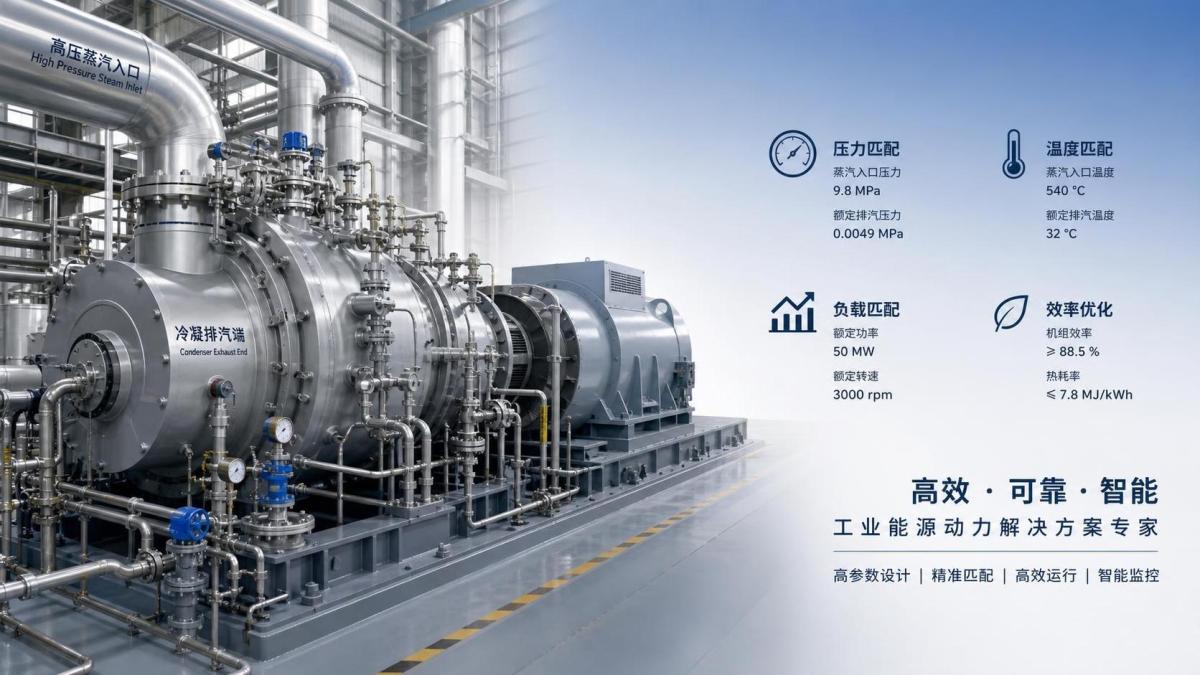
Price is usually the first number on the table, but it should not be the first filter. A steam turbine order goes wrong when the buyer compares offers before locking down the operating basis. In practice, the most important items to confirm are inlet steam pressure and temperature, exhaust conditions, required output, load range, operating mode, and site utilities. If those are vague, two suppliers may quote equipment that looks comparable on paper but is built for very different duty points.
For procurement teams, the goal is simple: define the process first, then judge the machine. A lower upfront price can quickly disappear if the unit is oversized, inefficient at part load, or dependent on service arrangements that add cost later.
What operating conditions should be clearly stated in the RFQ?
Your RFQ should tell the supplier exactly what steam the turbine will receive and what the downstream system expects. Leaving this open invites assumptions, and assumptions are where procurement risk starts.
- Steam inlet pressure and temperature
- Steam flow range, not just design flow
- Back pressure or condenser vacuum requirements
- Expected power output or driven-equipment duty
- Base load, cyclic load, or standby operation
- Ambient conditions and installation altitude if relevant
- Steam quality, especially if moisture or process fluctuations are expected
A buyer should also ask how the quoted performance changes when real operating conditions move away from the design point. Many plants do not run at one steady condition. A steam turbine that looks efficient at rated load may lose its advantage if the plant spends most of its time at partial load.
How do you know whether the turbine is correctly sized?
Correct sizing is less about maximum output and more about where the unit will spend most of its life. Buyers often focus on the top-end rating because it feels safer. That can be a mistake. An oversized machine may carry a higher purchase price, operate less efficiently at normal load, and create unnecessary maintenance exposure.
Ask the supplier for the expected efficiency curve across the actual operating range. If the turbine will run at 60% to 80% load most of the year, that range matters more than the nameplate number. Also check whether future expansion is a real requirement or just a possibility that has not been economically tested.
Is efficiency only an engineering issue, or does procurement need to evaluate it directly?
Procurement absolutely needs to evaluate it, because efficiency is a cost issue disguised as a technical issue. The right question is not “Which unit has the highest efficiency?” but “Which unit gives the best lifecycle economics under our steam conditions and load profile?”
When reviewing proposals, ask for the performance basis behind the quoted heat rate or efficiency figure. Was it calculated at design conditions only? Does it include valve losses or auxiliary consumption? If the turbine is tied to a broader energy system, those details become even more important. For example, facilities balancing grid demand may also look at solutions such as Air Energy Storage, where electrical energy is converted into compressed air and stored thermal energy, then released later for power generation. In that kind of environment, the steam turbine buyer needs a clear view of operating flexibility, not just peak efficiency.
Which configuration choices have the biggest cost impact?
Several configuration decisions can materially change both capital cost and downstream operating cost. Buyers should understand them early, because they often sit behind large quotation gaps.
If one quote looks much cheaper, check whether these items were excluded, simplified, or based on a narrower scope.
What documents should buyers request before placing the order?
A serious purchase decision needs more than a commercial offer. At minimum, ask for a technical datasheet, general arrangement drawing, performance guarantee basis, utility consumption list, scope boundary list, recommended spare parts list, and inspection or test plan if applicable to your project process.
The scope boundary list is especially important. It tells you what the supplier will deliver and what remains with the EPC contractor, end user, or another vendor. Missing clarity here is a common reason projects go over budget. Pipe interfaces, control panels, lube oil systems, instrumentation, and commissioning support should all be mapped clearly.
How should procurement review service support and spare parts?
Do not treat after-sales support as a soft issue. It affects downtime, maintenance planning, and the real cost of ownership. Buyers should ask who will provide commissioning, what service network supports the region, which spares are recommended for startup and the first maintenance cycle, and what lead times apply to critical components.
A cheap steam turbine can become expensive when the first unplanned outage requires parts with long manufacturing cycles. The practical check is to separate consumables, operating spares, and critical insurance spares, then price them as part of the buying decision rather than as an afterthought.
What are the most common mistakes buyers make during steam turbine procurement?
One is buying against a headline output number instead of the real steam balance. Another is comparing quotations that are not based on the same assumptions. A third is ignoring integration details, especially controls, auxiliaries, and installation interfaces.
There is also a recurring mistake in projects linked to broader energy infrastructure: teams evaluate the prime equipment in isolation. If a site is connected to systems such as Air Energy Storage for grid-related load balancing, the turbine specification should reflect the actual charge-discharge or dispatch logic of the plant, including how often the unit starts, ramps, and shifts load.
What is a practical way to make the final supplier decision?
Use a comparison sheet that forces technical and commercial alignment. Score each bid against the same operating basis, scope boundary, performance assumptions, delivery terms, service coverage, and spare parts strategy. That prevents a low initial number from hiding higher lifecycle cost.
The best buying rule is straightforward: if a supplier cannot explain how the quoted steam turbine will perform at your real operating conditions, the quotation is not ready for award. A clean order starts with a clean duty definition.
- ▶ When an extraction steam turbine improves combined heat and power output
- ▶ What happens when process steam demand changes on an extraction steam turbine
- ▶ How to match extraction steam turbine pressure to process demand
- ▶ When local service coverage matters for a gas turbine generator manufacturer
- ▶ How manufacturer lead times can alter a gas turbine generator project
- ▶ Which certifications matter when choosing a gas turbine generator manufacturer
Search from here
Leave a message
