




















How fuel pressure swings affect natural gas turbine generator output
How Fuel Pressure Swings Affect Natural Gas Turbine Generator Output
Fuel pressure swings can quickly disrupt the stability, efficiency, and power output of a Natural Gas Turbine Generator. Operators need to recognize these changes before they develop into alarms, trips, or equipment damage.
Even modest fuel-pressure variation can affect combustion quality, turbine speed response, exhaust temperature distribution, and load control. Stable gas delivery is therefore a critical operating condition, not merely a fuel-system preference.
Why Fuel Pressure Stability Matters During Normal Operation
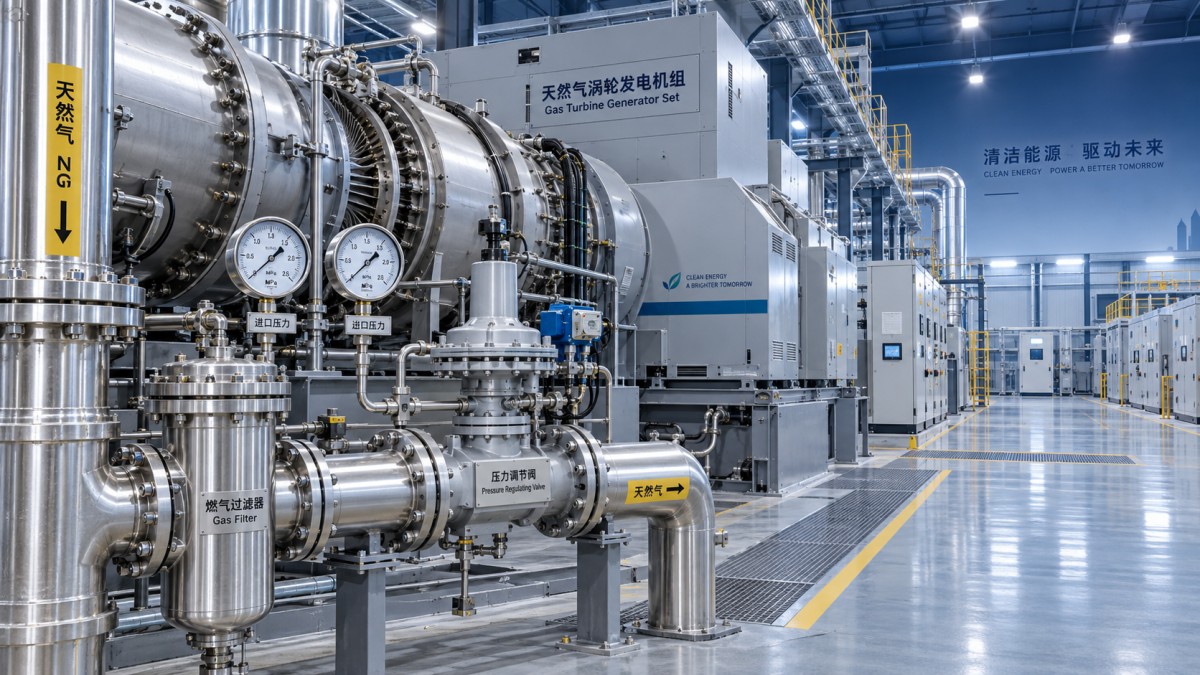
A Natural Gas Turbine Generator depends on a controlled fuel-to-air ratio. Fuel pressure determines how much gas reaches the combustors at a given valve position and load demand.
When inlet pressure falls unexpectedly, the fuel control system may need to open fuel valves further. If response is insufficient, combustion energy decreases and generator output can drop.
When pressure rises rapidly, excess fuel flow may temporarily occur before control compensation is complete. This can increase firing temperature, exhaust temperature, and combustion instability risk.
Pressure swings are especially important during load-following operation. A turbine operating at steady baseload can tolerate small variation better than a unit responding to frequent grid changes.
The impact also depends on gas composition, ambient temperature, turbine design, fuel valve characteristics, and control-system tuning. The same pressure fluctuation can create different results across units.
Operators should treat fuel pressure trends as an early performance indicator. A stable average value does not guarantee stable operation if short-duration pressure dips occur repeatedly.
Reviewing high-resolution trend data helps distinguish real fuel-supply instability from normal control adjustments. This is important before changing control settings or assuming a turbine fault.
What Happens When Fuel Pressure Drops
A sudden fuel-pressure reduction can cause the turbine to lose available heat input. The governor may request additional fuel, but physical supply limitations can prevent the demanded flow.
The first visible result is often reduced power output. Depending on operating mode, generator frequency, speed margin, or megawatt production may begin to decline.
At constant-load operation, the control system attempts to maintain output by increasing fuel valve opening. If the valve approaches its limit, load reduction becomes unavoidable.
Low pressure can also create uneven fuel distribution among combustors. Uneven distribution may increase exhaust temperature spread and cause individual combustion cans to operate outside preferred conditions.
If pressure decreases below the fuel system minimum, flame stability can deteriorate. Lean combustion conditions may lead to flameout risk, combustion pulsation, or a protective turbine shutdown.
Repeated low-pressure events can increase thermal cycling. Frequent firing-temperature corrections and load changes may contribute to wear in combustor components, hot-gas-path parts, and fuel-control equipment.
For operators, the practical priority is to determine whether the pressure reduction originates upstream, within filtration equipment, at a pressure regulator, or in the turbine fuel train.
How Excess Fuel Pressure Can Affect Output and Reliability
High fuel pressure does not always produce higher useful generator output. Modern fuel controls limit commanded flow, but rapid pressure increases can still disturb the intended fuel-metering relationship.
Short pressure spikes can cause temporary over-fueling. This may raise turbine inlet energy, increase exhaust temperatures, and force the control system to reduce fuel quickly.
Fast corrective action can appear as hunting in fuel valve position, turbine speed, or generator load. Repeated hunting reduces operating smoothness and makes stable dispatch more difficult.
High pressure may also increase leakage risk across fuel valves, seals, fittings, and instrument connections. Any suspected gas leak requires immediate action under established plant safety procedures.
Combustion systems designed for low emissions can be sensitive to fuel-pressure dynamics. Sudden changes may alter air-fuel mixing and contribute to higher emissions or combustion vibration.
Operators should compare fuel-pressure spikes with exhaust temperature spread, combustion dynamics, valve position, and megawatt response. A single pressure value rarely explains the entire event.
Pressure-control equipment should be sized for peak flow as well as normal operating demand. A regulator that performs adequately at baseload may become unstable during rapid load ramps.
Which Operating Signals Should Be Monitored Together
Fuel pressure should never be monitored in isolation. Operators gain a more accurate diagnosis by comparing pressure behavior with gas temperature, flow demand, valve position, and load response.
Fuel valve position is particularly useful. A falling pressure combined with increasing valve opening often indicates that the turbine is compensating for limited fuel supply.
Generator megawatt output shows the operational consequence. If power falls while load demand remains constant, fuel availability, combustion performance, and turbine limitations should all be investigated.
Exhaust temperature spread can reveal uneven combustion. A widening spread during fuel-pressure variation may indicate distribution problems, combustion tuning issues, or fuel-nozzle condition concerns.
Combustion vibration trends are also valuable where monitoring is installed. Pressure fluctuations that correlate with rising dynamics may require action before alarm limits are reached.
Review inlet gas pressure and pressure downstream of filters, regulators, and control valves. Comparing these measurements helps locate restrictions or unstable control points in the supply train.
Alarm histories should be evaluated alongside operating logs. Record the load level, ambient conditions, gas source, valve positions, and any maintenance activity near the event.
Practical Troubleshooting Steps for Pressure Swings
First, confirm that the pressure signal is reliable. Check instrument calibration, impulse lines, transmitters, electrical connections, and data sampling quality before diagnosing the fuel supply system.
Next, determine whether the swing occurs upstream or downstream of the main regulator. This distinction separates external gas-network issues from plant-owned fuel conditioning equipment problems.
Inspect filter differential pressure and maintenance history. A loaded filter can restrict flow under high demand, producing pressure drops that may not be visible during low-load operation.
Check regulators for correct setpoint, capacity, response behavior, and freezing risk. Regulator instability can create repeated pressure cycling, especially where gas temperature changes significantly.
Review isolation valves, manual valves, and piping restrictions. Partially closed valves, undersized lines, damaged internals, or condensate accumulation can limit fuel flow during transients.
Verify that fuel gas heating and conditioning systems are functioning properly. Changes in gas temperature can affect density, regulator performance, and the stable delivery of fuel volume.
Do not immediately retune turbine controls to mask a supply problem. Control changes can hide the symptom while increasing the likelihood of unstable response under different operating conditions.
How Better Fuel-System Design Supports Stable Generation
A reliable fuel system uses appropriate pressure-regulation stages, filtration, heating where necessary, accurate instrumentation, and control valves matched to the turbine operating range.
Fuel supply capacity should be assessed at maximum expected load, including rapid ramping conditions. Design calculations should account for pressure losses across all fuel-train components.
Redundant pressure transmitters can improve confidence in critical measurements. They also help operators identify a failed instrument without unnecessarily reducing turbine availability.
Control logic should include sensible rate limits, alarms, and protective actions. The objective is to avoid abrupt turbine response while protecting combustion stability and equipment integrity.
For facilities using combined-cycle configurations, stable gas turbine operation supports predictable downstream steam production. This protects the performance of equipment such as a Steam Turbine.
Integrated turbine systems should be evaluated as a whole. Fuel instability can affect gas turbine output, heat recovery performance, steam conditions, and the electrical dispatch capability of the plant.
Preventive Practices That Reduce Pressure-Related Trips
Create baseline trends for fuel pressure at different loads, seasons, and gas sources. Baselines make it easier to recognize abnormal behavior before operational limits are reached.
Schedule inspection of filters, regulators, pressure-control valves, and instrumentation according to actual operating conditions, not only calendar-based maintenance intervals.
Test protective functions during planned outages. Confirm that low-pressure alarms, shutdown setpoints, valve actions, and backup fuel-system responses operate as designed.
Coordinate with the gas supplier when pressure variation originates outside the plant boundary. Provide documented timestamps, load data, and measured pressure values to support investigation.
Train operating teams to respond consistently. Clear procedures should define when to reduce load, when to investigate locally, and when to initiate a controlled shutdown.
After every significant event, review root causes and corrective actions. Recurrent pressure swings should be treated as a reliability issue rather than an unavoidable normal condition.
Conclusion: Stable Fuel Pressure Protects Output and Equipment
Fuel pressure swings directly affect the ability of a Natural Gas Turbine Generator to maintain stable output. Low pressure can limit fuel flow, while high pressure can disrupt combustion control.
The most useful operator response is to compare pressure trends with fuel valve position, generator load, exhaust temperatures, and combustion behavior instead of relying on one signal.
Early detection, disciplined troubleshooting, and properly maintained fuel-conditioning equipment reduce avoidable trips, improve load stability, and help protect critical turbine components over the long term.
When pressure instability becomes repetitive, the priority should be identifying the source within the gas supply chain. Correcting the underlying restriction or control issue delivers more reliable generation.
- ▶ When an extraction steam turbine improves combined heat and power output
- ▶ What happens when process steam demand changes on an extraction steam turbine
- ▶ How to match extraction steam turbine pressure to process demand
- ▶ When local service coverage matters for a gas turbine generator manufacturer
- ▶ How manufacturer lead times can alter a gas turbine generator project
- ▶ Which certifications matter when choosing a gas turbine generator manufacturer
Search from here
Leave a message
